Listen

Becoming intimate with spirits,

I put my ear to the ground and listen

to the ocean rumble


I see wolves

they wear their hides like masks

prey on the flesh that peeks out from under skirts,

between breasts

what wanders in the dark


eschúchame, mi amor


Make yourself hard to chew


The ants are hardworking–

carry petals like treasures,

heavy and bright

 each a wish already made


Take one


rendición


Attune to the water, cold like a first breath


Most of the fruit is half lost,

decays slowly

like magic

feeds the strays

soaks the sand


The darkness is a friend


Perhaps this is why the air is sweet,

why I find kisses in the cracks of the pavement

awaken dreaming

a face I remember

but don’t recognize


This is how they paint the sky–

the gods I mean

Drinking moments like mead,

danger is dust behind them

they follow a golden road

and it never ends


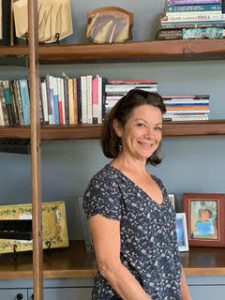
Liora Hassan (she/they) is an ambitious nonbinary writer and recent graduate of the University of Pittsburgh’s English department. Hassan likes to draw from various facets of her identity as well her everyday experiences to guide her work. They’re fascinated by the potential that literary art has to upset the norm and unearth new considerations. Hassan recently made Philadelphia to be her new home and looks forward to the changes it will bring.

In Paradisum

The basement furnace died at 3AM.

The chilly weather of early spring

Arrives by degrees inside the house,

Like seawater leaking into a hull.


We bundle up, treasuring our warmth.

By afternoon, the halls have chilled, as wind

Whines tunelessly and rattles at the glass.

“In Paradisum” from Fauré’s Requiem


Chimes down the crooked stairs like lazy stars

Revolving overhead, pining away

For me, yearning to have me home again,

Out there shining in solar Sargassos


Or ocean swirls of discarded plastic

Gathering in Pacific emptiness.

Fresh dust snows on furniture and floor. I breathe

The busy air, teeming with life, split by shafts


Of sunlight. My voice is dry from all the dust.

It’s taken over everything. It coats

The meniscus of my glass of water.

It’s made of us, our cats and candles—


Rumors of how our lives will be consumed—

Particles of meteor and pollen,

The powder that puddles on the floorboards

As nails are hammered into old walls—


Iridescent archipelagos of pearl

Trailing lagoons of chalk dust in their wakes.

Our self-incineration, which hardly hurts,

Starts lightning racing into nothingness.


I know we’re dust, and stardust too, but more—

Phosphorescent dust in oceans of sunlight,

Like breaths exhaled, diffusions, traces of song,

Engines firing in the voiceless dark.


Ernest Hilbert is the author of Sixty Sonnets, All of You on the Good Earth, Caligulan—selected as winner of the 2017 Poets’ Prize—and Last One Out. His fifth book, Storm Swimmer, was selected by Rowan Ricardo Phillips as the winner of the 2022 Vassar Miller Prize and will appear in 2023. Visit him at www.ernesthilbert.com.

Brutem Fulmen

Man is the only creature that is not always killed when struck — all others are killed on the spot; nature doubtless bestows this honour on man because so many animals surpass him in strength. — Pliny the Elder


The talk-radio host is provoking listeners to weigh in on what language we believe acts as the official discourse in hell. The host thinks it must be Latin, too many sins, he says, tented under Papal vestments, meaning too many thighs grazed behind the doors of countless sacristies for perdition to be voiced in any tongue other than that of its most zealous arbiters. The callers, on the other hand, are sure it’s English, or Hebrew, or that demons speak all languages, or none, because suffering existed before language, which to me seems the strongest argument, as I shift my car into park up the block from the warehouse you let slip was your last work delivery, last obligation, when you called to say goodbye (a contraction of “God be with ye”). I keep the engine running like Kojak or Columbo, watch you over my trash-strewn dashboard as you load boxes onto a hand truck. I will follow you, stop whatever crime you’re planning against yourself, because I know you’re asking for a savior. On the radio, another long-time listener shares that the word “suffering” comes from Vulgar Latin, a variant of “sufferer,” meaning to “endure,” or to “carry,” and for a moment I resent you. But then I see your truck bumping down the rutted warehouse drive, and I swing into traffic behind you. I keep at least two car-lengths between us. As we twist through rush-hour, the topic has turned from Hell to Heaven. The host believes we have no need for language in the afterlife because God is complete understanding. And while I agree that there’s comfort to be found hiding under the blanket of omniscience, it still makes me want to call in and remind everyone that awareness, God’s or our own, is essential to our suffering. Without it we wouldn’t know we’ve been abandoned. God couldn’t get angry. There’d be no Hell, no reason for it, or for any of our actions, and as the great TV detectives teach us: motive is everything. You jam a quick right, screech your van into a supermarket plaza, and I’m thinking, good, if you want groceries, it means you don’t want to die. Still, I shadow you into the store and calculate our surprise meeting among the vegetables, perform my shock at running into you like this, while you act as if you don’t know I’ve been tailing you since before we both ran that red light.


Keith Kopka is the recipient of the 2019 Tampa Review Prize for his collection of poems, Count Four (University of Tampa Press, 2020). He is also the author of the critical text, Asking a Shadow to Dance: An Introduction to the Practice of Poetry. He is the recipient of the International Award for Excellence from the Books, Publishing & Libraries Research Network, a Senior Editor at Narrative Magazine, and an Assistant Professor at Holy Family University.

The Masterpiece in Our Bedroom

San Girolamo, Caravaggio, 1605


In a dark room, San Girolamo writes with a quill pen.

He’s partially draped in a rich, red cloth, maybe a cloak,

maybe the covers from his bed as if he rushed naked

to the table straight from a dream, fevered with ideas.

A thick book on his lap. A thin halo’s edge,

barely visible in the dark, hints above his balding pate

at hallowedness. For all the years I’ve dusted this framed

postcard on our bedroom dresser, that little light remained hidden.

The blessedness I’ve always seen, what gets me

every time —the firm arm of a man reaching for — what?

a word? some truth? Muscled, alive, tendoned. Only the holy

of a bare-shouldered body.


Here’s the tableau: the ancient saint stretches without looking

toward an inkwell in shadows — books, cloth, oaken table,

and a blank-faced memento mori.

The man reads. The skull stares.

That hollow head a warning that the world’s fleeting,

the dark and light of afterlife eternal. But, oh, Master,

this is a game. The skull is half hidden, a dull

paperweight, unheeded.  Your model — bright, vital,

glowing with thought.


I conjure you whispering

as you paint, a voice escaping time from that museum

postcard on the bureau as my love and I loll in bed —

Listen, before it’s too late. Allow yourselves scarlet

bedclothes, and strong bodies in a glowing room,

and work you want to dive into, and books,

books are good, piles of them to retreat to,

partly naked, after rolling around

half the night with your love, alive, hungry,

eating up this life and one another while you can.


Mary Jo LoBello Jerome, a Bucks County PA Poet Laureate, edited the creative writing prompt book Fire Up the Poems. Recently named poetry co-editor for the Schuylkill Valley Journal, Mary Jo has published poems and stories in many journals. Her chapbook, Torch the Empty Fields, is coming out in 2022.

A Widow Learns About Mars, Molten At Its Core

Even now, is it possible to consider the self-original: the source

from which something arises?


Nothing solid after your death, one hour in that loss-space equaled

seven years of earthy life. Grief unoriginal and shocking.


Learning that Mars is quiet and seismically stable,

oddly reassuring. The silence inside of me

after you died. My thin, rigid outer layer, my lighter

volatile elements. Maybe,

I was not alone.


What trust is required to stay behind,

to hear good luck close by?


Like me, my new lover returns from near-empty space where sound

could not be heard, where atoms and molecules could not carry

our voices through air or water.


Now faith follows the sound

of our original music, wounded and delighted.


Amy Small-McKinney’s chapbook, One Day I Am A Field, written during Covid after her husband’s death, is forthcoming with Glass Lyre Press. Her second full-length book, Walking Towards Cranes, won the Kithara Book Prize 2016. She was the 2011 Montgomery County Poet Laureate, judged by Chris Bursk. October 2021, she co-taught a workshop with poet Nicole Greaves, Poetry & Aging: Does What We Have to Say Matter? at the virtual Caesura Poetry Festival. Small-McKinney resides in Philadelphia where she was born and raised.

Mama and the Clothesline/Tuckahoe 2001

She bent slowly, grabbin the damp

bedsheet from the laundry basket.

then stood, arms stretched

so nothin touched the ground.

Mama snapped the sheet in the

wind to scare the wrinkles out,

took the splinterin clothespin and

stuck it on the thin line runnin

cross the parkin lot. all our stuff

danced on display but the drawers.


We headed back to the basement to

wash the next load and she watched

me run behind her, her brown eyes

soft and laughin. this time, Mama

let me hold the quarters and the

whole buildin could hear me.

skippin and jinglin.


Edythe Rodriguez is a Philly-based poet who studied Africology and creative writing at Temple University. She loves neo-soul, battle rap, and long walks through old poetry journals. She has received fellowships from The Watering Hole, Brooklyn Poets, and Palm Beach Poetry Festival. Her work is a call for aggressive healing and is published in Obsidian, Sonku, Call and Response Journal and Bayou Magazine.

Springtime in Philly: A Mirror Sonnet


(Demeter)

Wake crocuses—push through crumbling asphalt;

purr and croon, slumbering cats curled like snails—

let feral dreams rumble through the sewers.

Snowdrops: root through the frost, unlatch her vault

and show her the way out; read the rock-braille

with fingers deft as mice feet, lithe as worms,

and tunnel to the Market-Frankford line.

She’ll board that train. Wake up, weeping cherries

and forsythias, down rows of brownstones

till the thaw gives way to fluttering vines—

my trademark welcome back sign. Wind: carry

my love notes by sea—fragrant balm of storms,

lilac, and exhaust. If only she would

eat that scent like seeds, undo sleep for good.


(Cora)

Eat that scent like seeds, undo sleep for good—

lilac and exhaust—if only I could.

Love notes come by sea in a balm of storms—

my soon-I’ll-be-back signs. They carry me

till the thaw gives way to fluttering vines

and forsythias. Down rows of brownstones,

I’ll board that train, wake up buds of cherries.

I’ll tunnel to the Market-Frankford line—

my fingers deft as mice feet, lithe as worms—

and I’ll feel my way out, read the rock-braille.

Snowdrops root through frost, help unlatch my vault.

My feral dreams rumble through the sewers—

cats uncurling from slumber to croon, wail.

But first, I must push through this crumbling asphalt.


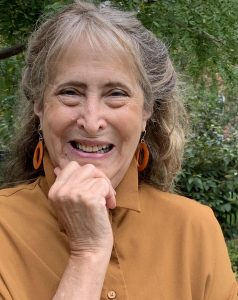
Dawn Manning creates art with words, metal, photography, and other media, in Delco, PA. She is the author of Postcards from the Dead Letter Office (Burlesque Press, 2016). Her poems have appeared in CALYX, Ecotone, Smartish Pace, and other literary publications. She also herds cats for local rescue efforts.

Exit

George Segal, 1975, 2020. Plaster, wood, plastic, metal and electric light.         

Lot of good it did me. Rising before dark.

There was a bench in the woods. I sat on it and waited for Autumn. It came too.

Light (tangelo bruise) brushed the leaves.

The wolf’s head in my satchel. Smells of fresh laundry and evil. Now the


Building across the way is burning. And not just that one, but all of them.

The floor feels good under me, cool. Sunlight hacked into fragments.

Shaved, paper-thin layers. I think I used to know the word


In Spanish. I’ll wait right

Here, dammit. One day they will

Deliver milk again. I’ll learn the Spanish for thank-you and betray.


I’ll step out the door to The End of The World to admire

Eros and the roses I spend so much


Time on. The yard, at night,

Illumined with strange light.


Leonard Gontarek is the author of eight books of poems, including The Long Way Home (2021). His poems have appeared in Field, Verse Daily, Fence, American Poetry Review, Joyful Noise: An Anthology of American Spiritual Poetry, and The Best American Poetry (edited by Paul Muldoon). He coordinates Peace/Works, Poetry In Common, Philly Poetry Day, and was Poetry Consultant for Whitman at 200: Art and Democracy. He conducts the poetry workshop: Making Poems That Last.


63rd Street: An Ode to Childhood

We wore slap bracelets and pants that swished. Housed somewhere between paradise and Cobbs Creek where the drill teams pounded percussion into our bloodstreams. We’d beg our parents for water ice in the summertime, itching to dangle from monkey bars or play freeze tag. The very mention of water balloon fights threatened the glory of our fresh braids and high-top fades. Yesterday’s blood-dried scrapes were forgotten. We were too preoccupied to notice the wood chips tickling the bottoms of our feet until the walk home. Cricket chirps, lightning bugs and moths prophet us with knowing that the day was well spent. Our teeth became stars of jubilee rivaling the streetlights. These were the days before it mattered that I couldn’t jump double-dutch. My heart hop-scotched to private ideas about rainbows and happy meals. Back then, I harnessed the boon of the present moment. Back then, I could reach for a cloud and give it a name.


Courtney C. Gambrell was born in Philadelphia, PA, where she currently resides. She is a Fellow of The Watering Hole whose poems have appeared in APIARY Magazine, As/Us Journal, For Harriet, Philadelphia Stories, the Healing Verse Philly Poetry Line and elsewhere.

Bewley Road

The tears started welling up as I watched another man drive off with my dog, Bewley. Bud, an elderly man, had come about an hour earlier to meet my dog. For three weeks, I had been meeting people, searching for a new home for Bewley. And while almost everyone seemed interested, I always hesitated. “The only way I’m giving him away is if I know for certain he would be in a better situation,” I’d say to each person. A part of me hoped no good candidate would appear. Then I got a call from Bud. He told me that he was a veteran, long retired, and looking for a new dog because his beloved dog died unexpectedly about a few weeks before. He sounded heartbroken, and as he described his life, I felt a growing discomfort in my heart. I knew that Bud was the one.

***

When Heather, my wife at the time, and I first found Bewley, he was at a local shelter. I spotted him first. He was the only dog that didn’t bark as I walked up and down the row. He had a beautiful coat mixed with dark chocolate, caramel, and white. He appeared about 50lbs, a mix of Chocolate Labrador and Doberman or Rottweiler. There was something regal about the way he stood—as if he were trained as a show dog. But he was not the dog Heather wanted; she wanted “Bubba,” the Shi Tzu in the tiny dog section. Because we’d been looking for our first dog together for months, with several close adoptions, I’d relented and agreed on the tiny dog. The next day, Heather drove alone to the shelter with a new collar for Bubba. By the time she arrived, he was already gone. That’s when she decided it was time to adopt Bewley.


Bewley was named after the road of our first residence together. The apartment was one of the few major decisions during our marriage that we instantly agreed on. We walked into the Bewley residence with the landlord, took one look at the built-in glass cabinets, turned to each other, and simultaneously said, “We’ll take it!”


I was anxious and nervous the day I picked up Bewley from the shelter. While Heather had grown up with a dog at home, I had not. She grew up in rural, upstate New York in a white middle-class family. I grew up poor in Trenton, the son of Cambodian refugees and once had a stray kitten. So, when my workday was over, I scrambled to get ready for the big moment. I placed garbage bags over the seats of my new car and made an appointment to get Bewley professionally bathed.


When I arrived at the shelter, I filled out paperwork and paid the adoption fee. I looked at his biography and was reminded that his temporary name was “Malta,” an awful name for a dog. There wasn’t much known about his history; he was found abandoned in Chester, PA. I was worried he might have experienced some abuse, but he showed no signs of aggression during the times I’d visited him.


Getting him home, in retrospect, was easy. As we walked through the pet store, he seemed to love people, and they all adored him. And after his grooming, he smelled and strutted like a winner. I bought him a fancy bed. When Heather got home, she instantly fell in love.


We were only in our second year of marriage when we adopted Bewley and still figuring out how to mesh with each other. Our relationship had always had major challenges. During pre-marital counseling, the therapist suggested we reconsider our engagement. We had regular clashes. But we plowed forward, hoping that love would be enough. We were both twenty-seven. Maybe it was that I was graduating and starting my career and felt the pressure to lay down a foundation. Maybe she was tired of living with her older sister and wanted to chart her own path. For many years after we separated, I turned the questions of our marriage over and over like a rosary that I’d hoped would give me a divine answer.


The first few weeks with Bewley were extremely difficult for us, particularly me. The expensive bed I bought him lasted only two nights before he chewed out the stuffing. He would try to hump everything in sight, which I found odd. Heather worked long nursing shifts at the hospital three days a week, and, on those days, I would drive home in the middle of my workday to walk him and then head back to campus. It grew increasingly stressful.


We decided to crate Bewley. As he adjusted, he’d bark at night. In our tiny rowhouse, that meant he ended up in the basement. He had been so quiet in the kennel—it was one of the main reasons why I liked him. I felt betrayed. I tried to comfort him, even singing to quiet him. One night in the bedroom, while Heather read a magazine on the bed, I brushed Bewley on the floor. I was so frustrated, I blurted, “I don’t know if I can keep doing this.”


She came down on the floor and started petting Bewley. “I know,” she said. “I can see you’re trying.”  Her voice cracked. “But if it’s too hard for you, we can take him back.”


This felt like one of my first great challenges as a husband. I had made a commitment to Bewley and the thought of quitting on him after one month made me feel like a failure. I’d understood that getting a dog was one of Heather’s non-negotiables when we discussed marriage. There was no guarantee that another dog would be an immediate improvement, and I held out hope that Bewley could be better. “No,” I said softly, “We can’t do that. I’ll find a way to make it work.”


The scariest thing about him was his aggression. Typically, he was playful but nondestructive (aside from his beds). But he had this other side. Two things riled him up: certain dogs and men. A veterinarian estimated Bewley was only about two-and-a-half. It was a mystery what kind of treatment he received in his early stages. He could have experienced abuse by other dogs or people and any reminders would retrigger rage and fear. I felt the power of it once when I was walking with Bewley at my side. A man strolled by and Bewley lunged at this man with such ferocity and anger that I thought he would tear the man to shreds. The only things that spared the man were his own reflexes and the length of the leash, which choked the dog as he fell to the ground. I repeatedly apologized as the man walked away with a horrified face.


After this and regular dramatic confrontations with other dogs during our daily strolls, I grew committed to changing this behavior. I researched various training programs. The trainer that fascinated me the most was Cesar Millan. I read his work and watched episodes of “The Dog Whisperer” in which he starred and featured dogs far worse than Bewley. I admired Millan’s ability to rehabilitate the fiercest dogs. His simple philosophy of “exercise, discipline, and affection” became my mantra.


I started walking Bewley “the Cesar way,” which required strict obedience and a short distance between owner and dog. By controlling Bewley’s head, I’d control his attention and keep it on me. I’d practice starting and stopping, restricting bathroom stops, and having him wait or even submit when another dog walked by. In essence, I was trying to focus on his discipline. And this worked, mostly.


Then Heather got pregnant. Two years later, we had a second child.


With two kids, a full-time job, and a working wife, being Bewley’s main trainer lost priority for me. I always wanted to be a father—that was my non-negotiable. I delighted in watching Sovi and Asher crack their first smiles, take their first steps, and go through each phase of early life. I had very little time for Bewley. And so did Heather.


When we agreed to get a dog, there was this understanding that Heather would be the primary caregiver. She was the dog-lover, after all. However, since Bewley had this aggression I was hell-bent on fixing, I became more involved than planned. Heather enjoyed Bewley, and they had a very different kind of relationship. She was the good-cop; I was the bad-cop. But she didn’t do things I’d assumed she’d do, like groom him regularly. It seemed she loved loving a dog but not caring for a dog, and I started to resent her for it.


One breaking point for me occurred when we moved to the suburbs and obtained a real backyard. Early on, I started noticing dog droppings under our holly tree near the fence at the property line of our neighbor. They had two dogs and a concrete yard with a tile pool. They had a habit of letting their dogs do their business until they couldn’t safely walk around it. Only then would they clean up. So, I’d see the dog poop under our tree, look at their yard and conclude: the neighbors were throwing the poop into our yard.


“How could the neighbors do that!” I said to Heather.


“I know,” she said, “it’s so gross.”


It kept happening. Bewildered, I finally decided to confront the neighbors. That got Heather’s attention, and she confessed. Since we now had a yard, she started letting Bewley use it as a bathroom instead of walking him around the neighborhood as we had agreed. I felt betrayed.


The new house was outdated, so we went through renovations of the kitchens, ceilings, walls, and floors. I spent many hours pulling out every single nail and staple left over from the carpets I had removed. And when I refinished the floors, I wanted to keep them that way. The great antagonist to my newly surfaced floors, however, were Bewley’s nails.


Sovi and Asher were three and one-and-a-half when we moved into the new house. We’d increasingly become worried about Bewley accidentally hurting the kids, so we’d often gate him in another room. He’d spend much of his time away from the rest of the family. The weight of married life with children increasingly sucked much of the joy of owning a dog. And it was increasingly making for a sad and frustrated dog.


We kept on plodding along for several months until the day Heather broke. “You need to find him a new home,” she said to me on the phone. “He growled at one of the children. I don’t feel safe with him around them.”  I had recently contemplated that idea myself but was stuck on that commitment I made four years earlier. I never imagined that Heather would be the one to ask for Bewley’s removal. I was sad, but I reconciled that if I could find Bewley a better situation I would do it for everyone’s sake.

***

Bud and I spent about a good hour talking about life, our families, and his experiences with dogs. He looked to be in his late-sixties or early-seventies, tufts of silver hair sticking under his military baseball cap. He had a leather bomber jacket on, and in his hands his own dog leash. It was much longer than the ones I used. “I have a huge property,” he said. “I love taking dogs on long walks and giving them enough slack to let them explore.”  He and Bewley hit it off right away. Bud loved Bewley with the intensity of a man who had recently mourned the death of his own. I felt a peaceful sadness as I handed Bewley over.


With my phone, I took a picture of them that is frozen in my mind, of Bud in his black pickup truck with Bewley in shotgun, without any awareness that he was leaving our family forever. Heather was at work that morning; the kids were in daycare. I didn’t even have the heart to tell the kids beforehand. As Bud backed down my driveway, Bewley’s face tilted, as if he was realizing something amiss. When I watched them turn off onto the street, I imagined Bewley jumping out the window and running back toward me.


I ran back into the house and wept. I started putting away items in the basement that Bud had declined. I felt Bewley’s presence more than ever before, seeing his head appear in the basement window, and imagining him sleeping in the kids’ beds, which I would have never allowed in real life.


It wasn’t until years later that I realized that day was the beginning of the end of my marriage. It became easier to let the seams fray. Surprisingly, Heather was less distraught than I was about Bewley’s departure. Probably I’d made the environment so miserable for her that she simply lost the joy of having a dog. I don’t remember seeing her cry once about him. Likely her goodbye was a slow one that had taken place long before mine. The sad truth is that in the weeks following his departure, we knew we had made the right decision—a great weight had been lifted—and we took comfort in knowing that he was in a better situation.


Bud twice brought Bewley over to visit over the following two years. By the second time, Heather and I were living apart. Bewley was almost ten and no longer had his youthful energy. He had silver patches in his coat. Yet he remembered the tricks I taught him, such as standing on two legs and begging for treats. I had memories of taking him for long walks with Heather, when we sometimes would let him off the leash in the middle of the woods and he’d bolt around. Watching him run carefree brought a smile to my face. It was one of those rare moments where I’d let my real affection for him show. I was only good at two of the three pillars of Cesar’s Way: exercise and discipline. I was never so good at affection—with Bewley or Heather. In that way, I failed them both.


The last time I saw Bud and Bewley, Bud struggled to walk up my stairs. This was partly why I stopped reaching out to him. I wanted him to stop feeling obligated to me. But over the years, I have thought about both of their advancing ages, and if perhaps Bewley may need my rescue again. I’ve imagined him living with me. And from time to time, I think about reaching out to Bud to see how they are both doing, but I always stop short of sending off a message.


Pol-Paul Pat is currently working on a novel about Cambodian Americans set in the Philadelphia area. He earned his MFA from Penn State University and teaches English composition and creative writing at Delaware County Community College in Media, PA.