Yesterday, my younger brother arrived in Philadelphia and immediately asked if I would make my signature oxtail stew. It was a last-minute request, and normally I would have made my way to Reading Terminal Market, the bustling temple of food and humanity. I’ve been going there since childhood, clutching my mother’s and Aunt Lillian’s hands, learning from an early age that food is culture and archive.
But I didn’t have the energy for the trip downtown, not yesterday. Earlier in the day, I had treated myself to a date with the library. I wandered the cookbook section of the Parkway Central Branch, then sat and listened to Miles Davis in the music department, drifting through the quiet like a rambunctious prayer. That building, designed by Julian Abele, a Black architect whose genius shaped this city, has always been my sanctuary. As kids, my cousin Desi and I would ride our banana- and apple-seat bikes from Overbrook to the main branch, leave them unlocked outside, and disappear into research and imagination. We had branches closer to home, but that grand building called to us before we could articulate why. We always felt it was ours. More than fifty years later, stepping inside still feels like stepping into possibility.
So yes, the date was lovely and nourishing in its simplicity. And afterward? I was tired. The thought of diving into Reading Terminal’s whirl of tourists, produce vendors, fishmongers hollering orders, the smell of spices and hot oil and all that history, I simply couldn’t do it. My body said no, and I listened.
A friend suggested a nearby meat market that many of our Caribbean and African community members frequent. What I found was a small, unassuming Dominican market with fluorescent lights, narrow aisles of spices and produce, a radio blasting merengue, and a young cashier dancing between customers like joy was his second job.
And there, behind the meat counter, stood Mr. Shottie, the unexpected sovereign of this tiny, protein-rich kingdom. A youthful Jamaican elder with a Clarendon accent thick enough to stop you mid-sentence, he ruled that butcher station like a gentle chieftain. He was part comedian and part culinary philosopher, a food griot. As he talked me through the oxtails and offered preparation tips, he insisted I take a bottle of his personal sauce: Shottie’s Jamaican Sauce. He said it was a much-needed ingredient for oxtails. I found myself leaning in not just to hear him, but to hear inside him.
Because in that voice, in the music of it, there was history layered like sediment. The rolling brogue of long-ago Irish and Scottish tongues, carried through colonial overseers and prisoners transported against their will. Beneath that, pulsing, grounding, steady, were the rhythms of the Akan and Igbo, those ancestral beats that refused to disappear. A New World language, born of rupture and survival, dancing on top of a Dominican merengue track in a West Philly butcher shop.
It was enchanting. It was ordinary. It was a miracle disguised as a grocery errand.
There I stood, surrounded by plantains and Scotch bonnet peppers, by chicken feet arranged like delicate relics (yes, I bought them; collagen is my ally and my cane thanks me), realizing this was not just a shopping trip. It was a reminder that history is not behind us. It is right here, humming and swaying between metal shelves and glass coolers, still unfolding, still calling roll.
In that modest market, I felt the whole Atlantic world in motion, the diaspora speaking back to itself, seasoning memory, stirring pots, laughing, surviving, feeding each other forward.
Sometimes you don’t need a Reading Terminal to feel the world. Sometimes the world meets you at the butcher counter, smiling, accent thick with centuries, handing you a bottle of sauce and a lesson in who we are.
And my brother, tasting that stew infused with memory and migration, grinned wide and said, “This is it. Home, found in a bowl.”
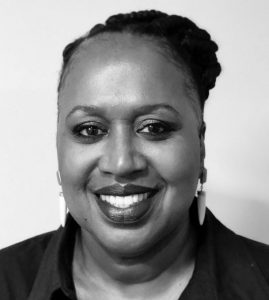
Octavia McBride-Ahebee is a Philadelphia-based poet, writer, and educator whose work centers migration, Black Atlantic history, memory, and place. A longtime teaching artist and community collaborator, she has contributed to multiple anthologies and cultural projects connecting Philadelphia to West Africa and the broader African diaspora. Her work often bridges literature, visual art, and public history, with a focus on overlooked narratives and intergenerational storytelling. She is currently engaged in several writing and arts initiatives rooted in community and social justice.