Book Review: More Strange Than True by C.J. Spataro

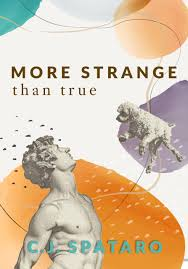
More Strange Than True by C.J Spataro

Review by Jennifer Rivera

C.J. Spataro’s More Strange Than True is a genre-blending novel of romance and fantasy set in modern-day Philadelphia. Spataro magically weaves together the story of a woman who makes a wish for true love in a moment of grief and transition.  Through this wish, she unknowingly invokes the help of the fairies from Shakespeare’s comedy A Midsummer Night’s Dream.  From that moment, Shakespeare’s famous words rang true, “Ay me! For aught that ever I could read, could ever hear by tale or history, the course of true love never did run smooth.”

The novel opens on the day of Jewell’s father’s memorial at a Center City restaurant called Puck’s Place.  While celebrating her father’s life with her childhood best friend Melody, and her restaurant owner boyfriend Bobby Fellowes, Jewell receives a text from her boyfriend Simon, in which he breaks up with her. While pondering her terrible taste in men, Jewell declares that men are worse than dogs, especially her dog, Oberon. Bobby sends her home with his newest dish, a magical mushroom pasta that has just been featured in The Philadelphia Inquirer.

After a quick trip to the dog park, she meets a lovely man named Steve. After being kindly rejected by Steve, Jewell and Oberon return to their apartment.  She digs into the deliciously magical pasta, sharing bites with the dog as they settle into their nightly routine. Jewell tells Oberon that he would make the perfect man for her. She reasons they share the same likes and dislikes and live together. Later in the evening, after thoroughly enjoying her meal, Jewell unknowingly calls out the faerie queen Titania three times, wishing for a man who will love her just as her dog does before drifting off to sleep.

In the faerie realm, Queen Titania searches for the sounds of the bells and crosses the veil from the faerie realm to Jewell’s apartment with her sisters, Ondine and Lolanthe. Although her sisters are more sympathetic to humankind, Titania reviles them, especially that fool Shakespeare, to whom she regrets showing herself.  But since she has come all this way, she decides to answer this human’s wish and turn her dog into a man. In a highly comical passage, the three fairies realize that the dog has been neutered and restore him to his original state before turning him into a man.

Once the dog has been transformed into a man, Titania demands to know his name. Oberon, he tells her, and the faerie queen is shocked, as this is the name of her long-lost husband.  Sensing the veil between their worlds is thinning, her sisters urge the queen to return home, but she is hesitant, feeling that fate brought her to the human world to meet her love again.

Jewell wakes up to the shock of her life: a strange nude man in her bed and her dog nowhere to be found. Oberon explains to Jewell that three women came and turned him from dog to man to fulfill her wish for true love. He proves it by recounting their trip to the dog park and meeting Steve. Although they are both still in disbelief, Jewell helps Oberon learn how to live as a human. Oberon contends with the loss of a simpler life as a dog.  As time progresses, Jewell and Oberon fall in love. Oberon begins working for Bobby, and their life together progresses.

Unbeknownst to the lovers, Titania has been watching them from her palace since Oberon’s transformation.  She returns to the mortal realm and confronts Bobby, uncovering his real identity as Robin Fellowes/Puck. Weaving the most crucial plot points from Shakespeare’s work, Titania seeks out other fae living among humans and attempts to put a spell on Oberon, so he falls in love with her.  She believes her spell to have brought forth the prophecy of the Elf King’s return. Similarly to A Midsummer Night’s Dream, the spells do not go as planned, and the humans become aware of fairies among them.

More Strange Than True masterfully intertwines Shakespeare’s magical world with the real world of a Philadelphia-based environment.  The novel explores similar themes of the intricacies of relationships, mental and physical transformation, and the havoc that magic can create no matter who you are.  Jewell and Oberon are forced to make heartbreaking choices, and it is in these choices that these characters discover who they truly are, and that love is rarely unconditional.


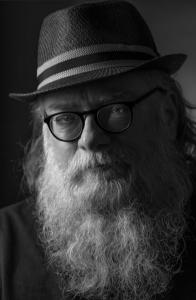
C.J. Spataro’s short fiction has been awarded a Pennsylvania Council on the Arts Fellowship for fiction and has been nominated for a Pushcart Prize. Her long short story, “The Twi-Lite” won the Iron Horse Literary Review Fiction Trifecta and was published as an e-single.She has been a finalist in many contests including the Larry Brown Short Story Award from Pithead Chapel, Sequestrum’s Reprint Award, The Switchgrass Review, Mason’s Road, The Philadelphia City Paper, and december magazine, where she was a finalist for the Curt Johnson Prose Awards for Fiction. In 2018 she was nominated for a “Best of the Net” award. Her work was featured three times in the InterAct Theatre Company’s “Writing Aloud” series (which was Philadelphia’s version of NPR’s “Selected Shorts”).As an editor, she has edited the fiction for three “Best of” Anthologies for Philadelphia Stories and edited the fiction and non-fiction for Forgotten Philadelphia and Extraordinary Gifts: Remarkable Women of the Delaware Valley.Her work has also been included in the anthologies, Healing Visions (Matter Press 2023), Taboos & Transgressions: Stories of Wrongdoings (Madville Publishing 2021), Extraordinary Gifts (PS Books 2014), Another Breath (PS Books/RC Press 2014), 50 Over 50 (PS Books 2016), and Forgotten Philadelphia, Art and Writing Inspired by Philadelphia Heritage Sites (PS Books 2012). Her stories have been published in a number of literary magazines including, Exacting Clam, Sequestrum, Phantom Drift, Italian Americana, december magazine, Permafrost, The Baltimore Review, Painted Bride Quarterly, and others. She’s had poetry published in Ovunque Siamo. She has a Bachelor of Applied Arts in Music from Central Michigan University, a Master of Music from Michigan State University, and an MFA in creative writing from Rosemont College. She has taught English composition, journalism, publishing, and creative writing courses at Rutgers, Rowan, Temple, and West Chester Universities, and at Rosemont College and the Community College of Philadelphia. C.J., or Carla as she is known by most, grew up in Michigan, which will always hold a special place in her heart. She has lived in Philadelphia for over 30 years, most of which with her partner, the artist and one-time standup comedian, Vincent Natale Martinez.

 

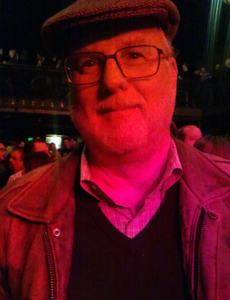
Jennifer Rivera (left) is a Latina writer and certified dog trainer. She received her MFA in Creative Writing from Monmouth University in May 2024. Her prose and poetry have been featured in The Monmouth Review.

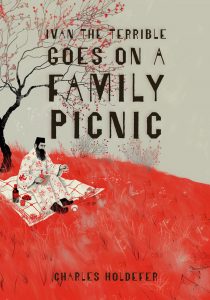
 

An Interview with Charles Holdefer

Charles Holdefer is a writer based in Brussels, Belgium. His latest collection of short stories, Ivan the Terrible Goes on a Family Picnic, has just been released. Holdefer’s fiction has won a Pushcart Prize and appeared in The New England Review, Chicago Quarterly Review, North American Review, Los Angeles Review, and elsewhere. He is also the author of six novels. You can find out more about Charles here.


Curtis Smith: Congratulations on your new collection, Ivan the Terrible Goes on a Family Picnic. I really enjoyed it. Not to let the proverbial cat out of the bag, but all of these pieces are about baseball, at least on some level. They take us through the years and across the world. My first question would be, how did this overarching structure/theme come to you? Did you have a few baseball stories already published and then realized you were writing more and more? Or was the idea there from the start?

Charles Holdefer: The structure came to me gradually. In Ivan the Terrible, baseball is a common backdrop, but the stories are very different, and you don’t actually have to care about the sport to get into them. They’re not about “how we won the big game” or some kind of fan fiction. For me, sport is a form of popular theater.  Human qualities and problems are dramatized, and it’s the individual character, not the contest, that counts. I tried something similar in my previous book, a novel called Don’t Look at Me, which referred to women’s basketball. It took me some years to pull Ivan together but once I started thinking more historically, the pieces fell into place.


CS: We see different times in history here—(1925 Paris! 1979 Chicago! 1569 Pskov!). Do you use any research/tricks to get your head into those spaces? Perhaps 1979 Chicago was easy, but Bufford County 1899 is a totally different vibe and backdrop—yet you ease your readers into each so deftly.

CH: It’s fun to try on different guises. I’m pretty careful to respect a baseline of accurate information about the twenties or the disco music era or the local team in Hiroshima, but in the end that’s only fact-checking. These stories aren’t “research” or historical fiction in the traditional sense. They’re speculative, sometimes wild and fanciful. Sometimes all it takes is an image, like a facial resemblance between Babe Ruth and Gertrude Stein, and then it’s off to the races.


CS: Yes, I wanted to ask about Gertrude and the Babe. I really enjoy when you bring in historical figures. You had a previous story collection that took on Dick Cheney and his ilk. And here, we get to see this unlikely duo of 1920s icons. I’m guessing you enjoy bringing these folks into your work. Can you address the rewards—and challenges—of using a historical figure in a piece of fiction?

CH: Well, the immediate reward is that I get to bring on stage a character with a ready-made backstory. This allows me to plunge straight into the action, no fussing around. The challenge is that this foreknowledge brings obligations. It should add something; it should matter somehow. If it’s only a cameo by a famous person without contributing to the meaning, then it’s an empty gesture. Here I use Ivan the Terrible to introduce a pastoral idea that gets played out in subsequent stories. This is an opportunistic appropriation that I hope is generative—but it’s definitely not “history.” Ivan is more light-hearted than Dick Cheney in Shorts, which was a darker book.


CS: You’ve been publishing a lot recently—novels and story collections. How do you juggle these projects? Do you work on a novel until a certain point—then take a break and write a cycle of stories? If so, do you have any go-to break points (end of first draft perhaps—or some other milestone in your process)? What benefits does taking a break offer when you return to your novel?

CH: Those are serious questions, but I’m afraid I don’t have a neat answer. I do feel happiest when I’m working, when I’m absorbed in something. But it can be hard, and I get stuck, so I bounce to something else. Then I bounce back. Break points like a first draft, or a fifth draft, are psychologically gratifying when I get there—but I don’t always get there. Publishing is nice when it happens, and I’ve been fortunate, but when a book comes out, due to the time lag, my head is usually somewhere else. I’m most at peace when I’m working.


CS: I liked all the stories here, but my favorites were “Foul” and “Deadball,” and while the book may refer to baseball, these two are really love stories. Do you think love—especially love that doesn’t quite connect—is one of the prominent themes in your work? Fitzgerald said he could only write about a few things—as you look over all that you’ve written, can you identify any central themes/ideas that you keep circling back to?

CH: In earlier drafts, I didn’t consciously set out to write them as love stories but for those examples, yes, that is what emerged, what I had to explore. I was drawn there. As for central themes, that’s a question I would’ve found impossible to answer a number of years ago. But with hindsight, I notice a couple of ideas that keep popping up. The first one: we’re not as smart as we think we are. The second one: we are more free than we usually allow ourselves to be. That’s about all I know.


CS: So let’s talk baseball. What was your favorite season/team? I’m partial to the ‘93 Phillies, but I have to admit the current Phils are pretty entertaining too. Who’s your all-time favorite player?

CH: When I was a little kid, copying my big brother who admired Mickey Mantle, I was intensely interested in the Yankees, which is a bit weird for a rural Midwesterner. But I had to get a divorce from New York during the Steinbrenner years. It got too obnoxious. Since then, I haven’t been particularly loyal to a team, but I still enjoy the show. As for a favorite player: well, it sounds corny, but when we were kids we used to study the backs of baseball cards and take note of the birth dates of players and write them letters with birthday greetings, and some of them responded. One special day a personal reply from Roberto Clemente landed in our mailbox. He’s a player I appreciate even more now, from an adult perspective. He was an impressive person, larger than sport, and I still watch clips of him on YouTube. And the game is not just about its stars; it’s about hard-working journeymen who are now forgotten, guys like Don Wert, who also answered us all those years ago. Thanks, Don!


CS: I really appreciate your tone in the book. There’s a real storyteller vibe going on—the book moves through places and time, but wherever we land, we instantly feel an intimacy with the characters. At this point of your career are you aware of tone—or have you been doing it so long that it comes easily? Another thing I enjoyed was the pacing—and in a way, it felt like a baseball game—unrushed yet full and complete—sometimes soaring and sometimes bittersweet. Was this in your head as well—or am I bringing too much of my current ball-watching frame of mind into this?

CH: Tone is the collision of language and plot, more or less. The shorter flash pieces have less plot and lean more heavily into language. But the longer stories give themselves more time to unfold, the pacing is different, with more events, and yes, perhaps it is baseball-ish. And though there’s some truth to the notion that the game is like life itself, I’d also underline how the limitations of the game compared to life account for much of its appeal. The space is strictly rule-bound and self-contained, and it provides a way to focus. We hunger for such focus in life. This heightened focus can be reproduced in art, and that’s definitely worth trying for.


CS: Loved the Dylan epigraph. What’s your go-to Dylan album?

CH: Not sure I have one, but Bringing It All Back Home has songs like “She Belongs to Me” and some others that have left imprints on my mind like tattoos. They won’t go away. Maybe it’s because of good songs that I’ve never bothered to get tattoos.


CS: What’s next?

CH: I’m immersed in a novel called Bomp that’s more formally challenging than anything I’ve tried before. Still trying to figure out its turns but am enjoying the experience.


Curtis Smith has published over 125 stories and essays. His latest novels are The Magpie’s Return (named one of Kirkus Review’s top indie books of 2020) and The Lost and the Blind (a finalist for Foreword Review’s Best Indie Adult Fiction of 2023). His next novel, Deaf Heaven, will be published in May 2025.


Solidarity

When protesters lie on the ground

it is called a die-in

and this is the tactic used

by my blue blotch pansies

when I’ve absentmindedly deprived them

of water. Before misting,

I try to pick out the ones

just taking a knee. I know

there must be at least one

who has gotten plenty of water,

in fact, is drunk on it:

thick roots, muscular petals;

the water having pooled

in his little side of the pot. He,

who is not even thirsty,

but lies down anyway

because his neighbors’ suffering is his own.


John Wojtowicz grew up working on his family’s azalea and rhododendron nursery and still lives in the backwoods of what Ginsberg dubbed “nowhere Zen New Jersey.” Currently, he teaches social work at Rowan College South Jersey. Recent or forthcoming publications include: Rattle, New Ohio Review, Sonora Review, and The Ekphrastic Review. He is the author of the chapbook, Roadside Attractions: a Poetic Guide to American Oddities. Find out more at: www.johnwojtowicz.com.


Street Impressions

Chester Avenue, Southwest Philadelphia, early 1960s


As on a children’s show,

the green-and-cream trolley

with wide windows for eyes,

an emblem above the headlight

like a little mustache,

would come into view—

its doors hissing open, then closed

before it went hiccupping

over the cobblestone tracks.


And down the back alley

past Rusty the Boxer

and Bunky the Beagle,

stirred up along the hairpin fences,

the songs of hucksters

carrying splintered baskets

of freestone peaches

and Jersey tomatoes;

the neighborly chatter

of clothes on the lines.


And the characters we’d meet

along the avenue:

Alex the shoe shiner

and John the milkman;

palsied Mr. Packer

with his handcart of Schmidt’s.

The older boys, who with sycamore pods

they gathered from the curbs

to chalk their lessons—

scrawled in cursive

on the slates of our necks.


Joseph Chelius is the author of two collections of poems with WordTech Communications: The Art of Acquiescence.


Gentradelphia

I see whiteness, lightness; is it righteousness?

I feel invisible, a little miserable.

Few Black women, more Black men.

White women and men and dogs galore.

I abhor the fact, the lack of colorful faces

in places where there used to be more.

The city is nicer on the surface,

but to what purpose? Who for?

The scene is pretty but lacks an underscore.

Sore, sore, sore of a space. Sore of a place.

Bandaged to heal, but when you peel—rip—it off

a scar covers up what was unsure.

And you can’t always remember the original lore.


Shaleia Rogers-Lee is an emerging poet. She grew up in Delaware County and currently lives in Philadelphia. She writes about Philadelphia, women’s experiences, being Black in America, fairy tales, and anything she wants to explore. Shaleia has an MA in Writing Studies and a BA in English.


Seance

The world of direct marketing

is a medium reaching out to you,

dearly departed first wife.

Three decades since our divorce

and as many changes of address,

Progressive still wants you to know

you can save when you bundle your insurance.

No tarot cards, no crystal ball, just an algorithm

that believes we’re still together,

that believes you’re still alive.

One flier seems to say

Give us a sign. Show us

you’re interested in Viking cruises.

And now, eight months since you died,

in the inbox of a seldom used email,

they want to know, dear dead one,

who you plan to vote for in the fall.

Of course, you never left me,

haunted me long before you actually died,

but I’m the only one who should know

you’re there in the guilty way I go on breathing,

the way I venerate the only photo of you I kept

like an icon of a long lost saint.

Now, Facebook necromantically

conjures your picture, tells me

you’re someone I might know.

The veil is thin in cyberspace.

I click on your image, make you my friend.

A friend is better than a ghost.

Isn’t it? Give me a sign.


R. G. Evans is a New Jersey-based poet, writer, and songwriter. His books include Overtipping the Ferryman, The Holy Both, and Imagine Sisyphus Happy. His albums of original songs, Sweet Old Life and Kid Yesterday Calling Tomorrow Man, are available on most streaming sites.


Flying Over Western PA

Allegheny hills flatten on ascent

carlights below I press my nose against

airplane glass as we bank I think the hillsides

rise just a bit just like breath before I left

Dad filled my washer fluid, Armor-alled the dash

I didn’t ask for Windex blue he is a man of few words

and many solvents. I packed last items glitter dress

satin heels he cleared snow off my windshield

started the ignition but listen: this is what a father does

he scrapes, wind blows because he hasn’t let her go

just yet she will live across the state and trace a path

engine ever humming bootbrush hills winter ever coming

leaving home it’s sunny second time this year

but the turnpike route, the windshield–both are clear.


Jessica Whipple writes for adults and children. She published two children’s picture books in 2023: Enough Is… (Tilbury House, illus. by Nicole Wong) and I Think I Think a Lot (Free Spirit Publishing, illus. by Josée Bisaillon). Her poetry has been published recently in Funicular, ONE ART, Pine Hills Review, and Identity Theory. Jessica’s poem “Broken Strings” (appearing in Door Is a Jar) received a Best of the Net and a Pushcart nomination. You can find her on Twitter/X @JessicaWhippl17.


Contrary to Popular Belief, or, My Parents Debate Religion Over Coffee

My father doesn’t believe in God the way

he thinks he should. There will always be

barriers between the holy and the tangible,

and today, it’s Big Bang vs Genesis. I think

this world will never have the answers for

bare feet on the water’s surface. But still,

he is suffering, too. My mother believes

the moonlit garden where we were born

is pure. My father sees the other half. God

is not limited to beauty; the world he built

is far from perfection. It is blossoming with

faith thin as the broken breath between

sips of coffee gone cold. Tension tethers to

our living room gilded by dawn. My father


my mother believes, but when he sees her,

stained glass and baptismal waters shifting

between what is known and what is felt,

he feels obligated to choose. Worries that

resurrection, water deepening to wine, and

sin cannot be explained. If God is salvation,

he is Monet’s lily pads, each lotus sunset,

and the earth we are buried in. For her, this

answers everything, creates all. But divinity

encompasses heartbreak, hatred, death,

ignorance and childhood leukemia and

trigger fingers. My father rests, takes

my mother’s hands, and silence swaths

doubts. Much like God asks, though, he


believes in being good, no matter what follows death. I’m not sure there’s a difference.


Annabelle Smith is a student at Franklin & Marshall College in Lancaster, PA. She has received national recognition for her work in poetry from Scholastic Art and Writing Awards. More of her work can be found in Spotlong Review, Potomac Review, Black Coffee Review, and other journals.


Oxygen Destroyer

As long as I’m alive, who can say I wouldn’t be coerced into using it again? – Dr. Serizawa (Gojira, 1954)


Brackish water detonates, stickleback failing

to squirm from the kingfisher’s bill.


Swept into the branches, what remains:

smash the spine, suck bladder from bone.


Pistol-mouthed sun edging the lips

of the river. Last night, I fired


upright in bed, struck by a moonbeam of panic:

Twelve years on, you’ve somehow escaped,


survived by a stream of electrons,

mourning notes, your candle’s animation


frozen on my laptop’s open window.

I almost titled this Open Window


to bear witness to not just your death

but the power of air, the advantage of height,


the threshold you once threatened

for my murder. Still your tremors


haul me, flailing on my side

in your mouth, from the boiling surface,


each eye fixed on its own dimension,

talon and water and sky. Here, the air


I can’t respire. The delta shrugs, pulls again

its body to its neck, forgets the waves,


the trace scales floating. Sleeps.

Surely you are not the last lizard


to crawl from this ocean.

If we keep testing this weapon,


you may yet rise again. If our atoms touch,

our bodies will explode.


Dan Schall is a poet and teacher based in Pennsylvania. His work has appeared or is forthcoming in Willows Wept Review, Anthropocene Literary Journal, Arboreal Literary Magazine, Merion West, Cartridge Lit, Thimble Literary Magazine, The Shore, The Light Ekphrastic, Right Hand Pointing and many other journals.


Tombstones in the Delaware River

Graves warehouse

immortality like a bank

stores bullion. Yet,

if the need arises,

a defunct cemetery

may wish to break

open the marble assets

deposited to its care

by evicting a few

unaccounted bodies

and auctioning off

its surplus headstones,

now repurposed as rip rap

for the Betsy Ross.

At low tide, when

the velvet waters

draw back you

can see the markers

stacked around

the bridge piers like art

displayed in a rich

man’s parlor, names

and dates showing

on their banknote

faces. They have ages

left, standing security

for capital improvement

in perpetual care, though

not as was intended.


Chris Bullard is a retired judge who lives in Philadelphia. In 2022, Main Street Rag published his chapbook, Florida Man, and Moonstone Press published his chapbook, The Rainclouds of y. Finishing Line Press has accepted his chapbook, Lungs, for publication in 2024. He was nominated this year for the Pushcart Prize.