Betrayal in the Shadows

Bella was a normal 18-year-old girl living life. She was a cheerleader, and her senior basketball team, representing Central High, was playing against the Bulldogs. The game was fun, but she wasn’t in the happiest mood. Her dad, Robert, was stuck at work as usual, and her mom Katie was staying with her sick grandmother, taking care of her since she was very sick with a heart disease. Normally her parents were always at the games, so Bella was quite disappointed. At least her dad wrote her a long text.  “Have a great game lovebug, you guys will do great, can’t wait to see you!” he exclaimed…but she didn’t respond. She just felt drained.

The game was down to 4 seconds, and it was her team with the ball. Hunter Jackson, her teammate, had the ball ready to shoot. He scored with ease, and the crowd went crazy. Bellas’s sadness immediately turned to joy. 

“I’m so proud of you guys!” said Coach Amber.

Bella wished that those words came from her parents, but after THAT victory, she was content enough to just go home and tell her parents about her team’s amazing win. Anxious to spill the great news, she got in her blue Bronco and drove homebound, all while California Girls, her favorite song, boomed through the speakers. 

Bella pulled up into the driveway and went into her house, which seemed eerily quiet. 

“Hello?”

No answer came, much to her dismay.. called her dad, and it went to voice mail. A call to her mother followed…which was answered to the clear sound of tears. 

“What’s wrong mom?” she spoke.

“Honey, I need you to listen to me carefully.”

“What is it, tell me”

“We just got a call from the police and medical professionals”

“You are scaring me”

“Dad has been killed.”

Bella’s heart dropped, feeling a pain in her chest like she was just shot. She slumped downward to the ground, on the floor in silence. She felt nothing, absolutely nothing. 

The cops reported that there was an investigation. They said they found him by the creek where the family used to go fishing. There were no stores or cameras so they investigated everyone they could think of, and Billy, her dad’s best friend and business partner, helped too in any way he could. Unfortunately, there was just never enough information, nor were a few missing items ever found, in particular a watch that she gave her father for his birthday. Her entire life had changed, and there wasn’t a single lead to bring justice and closure.

As time passed, Bella’s mind had sunken. Her depression led to many absences from school, resulting in a transfer to online education.  Still, her grades were failing and the pain and tears got worse every day.  As she grew older, she tried to get her life together. She started studying criminal justice and preparing herself for a better future. Bella got a scholarship to Temple University, and graduated with high honors. She eventually began a job as a detective at the local police department where her dad had worked.

Bella’s job was going well, as she was figuring out crimes and reporting them in days. She was making pretty good money and getting great compliments from everyone, especially the oofficers who knew her dad.  “Your dad would be proud,” was a common compliment, and that made her feel great inside because she always wanted to be just like him. 

During this time, on a relatively easy workday, she realized they hadn’t spoken to Billy in a while, and soon after found out that he had quit. She asked around and they said he didn’t have a reason, he just wanted to leave. Maybe because it made it hard without Robert. Well, that’s what she hoped. 

When her mother Katie got home that night, she told her mom how she had realized that Billy had quit.

“Oh gosh, I’m a terrible person.” said Katie.

“Why?” asked Bella.

“That was one of your fathers closest friends, and we have not checked on him in a long time.”

“Well it can be the other way around, and it was my dad who died, not his,” Bella retorted.

After the conversation Bella went to her room and thought it would be a great idea to look for apartments, as she was now 22 with her own money and job. She didn’t want to stay as her moms responsibility. Bella found a condo for fifty thousand dollars on Broad and Fever street, right next to the old coffee shop she frequently visits. 

It took a little time to figure everything out, but she ended up buying it. She had two weeks to officially move her stuff in and pay in full. She was so excited..but it gave her flashbacks..a deja vu event. She couldn’t remember why, but something was weird. She continued to move into her new home until she saw something that surprised her. 

“Billy?” she said.

“Well, hi, long time no see,” he responded, looking equally surprised to see Bella. They hugged and laughed awkwardly. 

“How have you been Bella Bug?” he said.

“Could be worse but I’m making progress.”

“We’re going to have to catch up sometime, maybe over dinner.”

Bella continued to walk upstairs to her apartment, but something felt off. The vibe felt off. Her apartment room was big with glass windows and dark grey walls, and her bedroom was cream colored with a queen-sized bed. It felt great for her to have a big bed to herself, but she always had these nightmares where her dad passed away, and they haven’t gone away in a while.

One day, Bella hears a knock on her door.  She opened the door slowly, and it was Billy.

“Oh, hi.” “What are you doing here?” said Bella.

“Well, I wanted to know if you wanted to have dinner with me tonight?”

“Sure, what time?”

“You can come by 7.”

Bella showered and put on a black shirt with blue jeans. She got her purse and walked to room 207. That was Billy’s room.

“Knock”

“Hello Bella.” “I made chicken alfredo,” said Billy.

“Ok smells really good.”

Bella sat at the table and waited for Billy to bring out the food. It smelled great, like it would be at a fancy restaurant. He placed the plates down with the food and gave her a knife, but his hands were shaky. 

“Are you ok?” said Bella.

“Yea just havent seen you in awhile and I feel awful about everything with your dad.”

“Well it’s in the past,  and he is always missed.”

“Wheres your bathroom?” Bella asked.

“Down the hall to the left.”

Bella walked down the hall to the left. She was peeing when she looked up and saw that the ceiling was somewhat open. Initially ignoring it, she washed her hands but something just felt weird. So she climbed on the toilet and put her left hand inside. She felt a box.

“Its not my business,” she said to herself.

Still, something made her want to open it. So she did. Pulling it towards her, she looked inside, but she instantly regretted opening it. She found her dads watch in the box along with his chain and wallet with what appeared to be old, dried blood.

There’s a knock on the bathroom door.

“Is everything good in there?”

“Uh yea one sec.”

Bella took everything and put it in her pocket. She unlocked the door and Billy was standing there.

“Are you ok?”

He had a weird look on his face…like he knew something. 

“I got to head on out” she said.

“But wait.”

The watch had fallen out of her pocket and to the floor. The silence tat came after was loud and weird.  She was scared, and so was he.

“I give up.” he said.

“What did you do to my father?!?”

“He drove me angry, and I couldn’t take it.”

Bella grabbed her stuff and ran, but he followed and chased her. She fell and he was right behind.

“No!” she screamed as everything went black.


Irelynne Guinup goes to Franklin Towne High School. She is a cheerleader and a softball player. Irelynne would love to go to college to major in nursing.
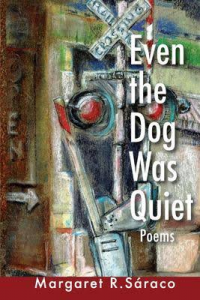
Review: Even the Dog Was Quiet by Margaret R. Sáraco


Review By: Nicole Conti

In Even the Dog Was Quiet, Margaret R. Sáraco crafts a haunting and emotional collection of poems that delve into the fragility of memory, the weight of loss, and the resilience of love. From the very first moments, the book establishes a poignant tone with jarring imagery of a burning house, a powerful metaphor for the slow, inevitable destruction that time and loss inflict on everything we hold dear. Yet, in the face of such loss, what remains is memory. Throughout the collection, Sáraco reflects on how love—whether for family, fleeting lovers, or friends—lingers in the fragments of memory we preserve, like echoes of a once-thriving home now reduced to ash. Her poems emphasize the importance of remembering, of holding onto the pieces of our past that define us, even when everything else is lost.

In reference to The Unlocked Door, Sáraco’s poetry serves as a “dose of fresh air cleansing a complex world.” Her work focuses on small, flickering moments, whether jagged with grief or buoyed by the sweet imagery of fruit, wine, and morning glory elixirs. These moments allow the reader to fully immerse themselves in her world, where each memory is carefully dissected and preserved. Sáraco grabs these small moments, milks every detail, and then delicately lays them out on the page, using beautiful poetic devices and vivid sensory elements. In many ways, her poems form a kaleidoscope of personal moments, frozen in time. She alludes to this in the poem Tall Ships, where she writes, “a moment in time caught with oils on canvas or a poet’s words.”

Sáraco skillfully orchestrates these themes of loss and love with mood. Take, for instance, the contrast of frigidness and warmth in Bobby and the Bonfire. The poem captures a heartbreak that shifts into a heartwarming end—the coldness of young heartbreak dissolving into warmth when the speaker gifts a ring to her future daughter. In ‘Between the Sheets’, the mood is heavy, cold, and sharp, underscoring the tragedy of loss with lines like:
“His words fall on our bed, gray shards
now next to my inexperienced and young body, mournful and
scared.”

Here, the sharpness of grief and regret is palpable. The poem’s coldness contrasts sharply with the warmth of memory in ‘Pink Hula Hoop’, where, despite the surrounding grayness, a glimmer of hope in the memory of her son’s childhood toy glistens, high up in the trees. It is a reminder that, even in the most somber of memories, brightness and hope can emerge.

Saraco’s writing is also glazed with poetic devices that further the beauty of these moments. The line “the day she dies in her sleep” demonstrates her skillful use of sibilance and alliteration, a technique she’s perfected throughout the book, as seen in phrases like “Slicing flesh… wrapping pounds of fillets in wax paper and plastic wrap while sweat drips down her face.” Some of her other notable uses of alliteration include “sun-starved skin,” “boots, battling bluefish,” and “disease disrupting our days.”

With the ‘End So Close, We Only See Beauty’ is another example of Sáraco’s brilliance, particularly in her metaphor of the bright green parakeet, stark against its sterile environment, “monochrome of confinement.” It echoes her mother’s vibrant spirit, which stands in sharp contrast to the cold, limiting space around her. In ‘Cookies’, Sáraco taps into sensory detail with lines like, “it’s filled with brown and black shoes that smell like grandma’s old leather bag left out in the rain.” This sensory detail pulls the reader into a world where memory and the senses are inextricably linked.

Beyond memory and love, Sáraco touches on other significant themes, including the struggles of an immigrant family and feminism, particularly in Dear So and So, where she explores the myths designed to keep women compliant. The collection traces the threads of girlhood and womanhood, showing how they intertwine throughout life.

In Recycle, 2017, she ponders, “Why do I despair amid such beauty?” The book itself answers this question: we despair from beauty. It’s the pain that spills from love—the beauty of it, but also the great despair in its loss. This is why remembering is so important: because, in remembering, we hold onto the beauty of love and the pain of its absence.

In the title poem, ‘Even the Dog Was Quiet’, Sáraco teaches us the value of memory, not just as a means of preserving the past. The speaker writes everything down so the heart can remember when the mind has forgotten. Through this collection, Sáraco shows that memory is all we have left when everything else is gone. Toward the book’s conclusion, she reflects with envy on her son’s precise memory and muses about how we will all be reduced to “reminders of life’s past.” In this reflection, there is an irony: Sáraco, herself, has created a lasting memorial—Even the Dog Was Quiet—a book of memories that will endure long after the moments they describe have passed. In Sáraco’s own words, “Really, we are here for a moment, and then we are gone.” But her work has left many of her memories- which deserve to be remembered.


Nicole Conti


Review: In the Museum of My Daughters’ Mind by Marjorie Maddox


Review By: John Sweeder

Majorie Maddox’s chapbook, The Museum of My Daughter’s Mind, is a collection of 34 ekphrastic poems that were originally inspired by the author’s 2018 visit with her studio-artist daughter, Anna Lee Hafter, to Baltimore’s American Visionary Art Museum’s (AVAM) exhibition entitled The Great Mystery Show.  Influenced by her daughter’s subsequent artwork, Maddox features 18 of Anna Lee’s surrealistic paintings as well as the mixed media, photographs, and paintings of six other contributing artists, several of whose works have also appeared in the AVAM.

Maddox’s poetry explores the themes of positive human relationships, both interpersonal and intrapersonal, as well as the significance of imagination and creativity, improvisation, memory, nostalgia, grief, isolation, and alienation. Incorporating many of the repeated images contained in eighteen of her daughter’s surrealist paintings, Maddox embeds visual symbols—often numbers and letters, words and brief phrases, as well as concrete images and symbols such as chairs, chessboards and sunlight into her poetry, thus melding visual art with poetic language in an emotive symbiotic dance to deepen illustration her relationship with her daughter’s creative process.

In her pantoum, “The Choice,” Maddox uses her daughter’s visual metaphor contained in Hafter’s painting entitled “The Library” to explore one’s intuitive imagination using bibliographic tools—books, bookcases, floors, and ceilings—to seek truth, “The ancient why of creation”—all the while purporting that there is no set path to take in the pursuit of knowledge since we, “hold the pen and paintbrush” to create our own “Open Sesames.” The poem’s narrator further proposes that we not fret about making poor decisions since “splatter[s are] choices, not… mistake[s].”

In “High Top” Maddox, responds to her daughter’s surrealistic painting of the same name. Both artist and poet engage in an imaginary conversation as if seated across from one another in empty chairs separated by a table and chessboard, all of which are precariously balanced upon a seesaw, a “compass-needle pole.” The narrator-poet-mother asks her daughter: “Are we still we in this unseen grief/that keeps trying/ to listen to soul/ and scream?” Anna responds with her metaphorical “King’s Pawn Opening.” The two opponents in this fantasy chess match are unsettled for the moment, suggesting an estranged relationship. Yet, because of their long family history (“knee-deep in nostalgia”), a reproachment has begun: Mother “can almost see [her] breath;/ daughter “can almost touch [her] words.” Their unspoken grief remains on the table unresolved; however, both are “waiting for [each other’s] next moves.”

A lighter, more optimistic tone is struck in Maddox’s poem, “Sun on South Street.”  In this straightforward pantoum, the narrator enables us to imagine what life is like living in a “small quiet room” in a “Big busy city.” Exploring the contrasting themes of isolation versus “camaraderie” and light versus “dark,” we learn that days can be “brightened by the waves of strangers,” “the neighborly sun,” and “outside flowers” on balconies displayed for all to enjoy.

Hafer’s painting, “The Letter E” is an abstract tribute to the creative, right-brained random learner who does not “absorb new information” in a rigid sequential manner. Maddox adapts the theme of her daughter’s work to create an ironic poem of the same name whose narrator morphs into the didactic elementary school teacher we all recognize, the anachronistic school marm who proclaims, “Creativity’s the one transgression/ I won’t allow,” further arguing that curiosity and extraneous questions are no more than “time-wasting, silly digressions…[and] enemies of order.”

Maddox is inspired by the “tender but unsettling portrait” of a pig-tailed pre-pubescent girl holding a black cat, painted by Margaret Munz-Losch. In Maddox’s poem, “Black Cat,” a third-person omniscient narrator tells us that we, as unwanted voyeurs (perhaps the girl’s parents), enter her “stark room.” The anthropomorphized cat she cradles in her arms stares at us with its “bright feline eyes” thinking she doesn’t want us there. The girl’s dull skin squirms like a “pattern of maggots,” her eyebrows are perched like flies above her “dead-sea eyes,” and her tied-up hair is uncombed — all of which the narrator tells us we “cannot see.”  These imagined attributes are symbolic of the alienation that many young preteens experience—that is, they want (and maybe need) their own space to develop and mature. Thus, in the lives of young tweens we adults become as welcome as an “infested larvae of plague” hatching into them.

Maddox’s final poem, a sestina with the oxymoronic title, “Wild Rest,” was inspired by her daughter’s painting of the same name. In this work, the narrator begins by posing and answering the following question, “What does it mean to rest…in “a world so wild?” Maddox claims that through daily measured breathing, relaxed contemplation in a “well-worn chair,” and reliance upon our imagination, we should let our mind “wander out amidst the trees.” By exploring a “paradox of renewal,” we learn that “passive breezes [can] become wind” and that “rest [can become] a carnival tour of the spontaneous,” replete with roller coaster rides, fun houses, and Whack-a-Mole games. Maddox wants us to “Be still and know” and recognize “that breath and wind are cousins.”

As careful readers of literature, we are drawn to Maddox’s chapbook for a few reasons.  First, we readily identify with her motivation in creating this work. In her book’s introduction, “Entering the Gallery,” she tells us directly that she is “looking to escape [her] fears” of dying prematurely from heart disease and wants to spend the remaining time she has left with her daughter.  Many of us identify with this sense of urgency in reconnecting with loved ones while we still can. Time is both short and precious. Next, like Maddox and her daughter, we too enjoy visiting art museums, even small, intimate ones that may contain only a modest number of paintings like the ones in this chapbook. But when art and poetry challenge us to look and read more closely, when art and poetry become melded together, our aesthetic experience is enhanced. Through Maddox’s skill in creating the impressive array of interpretive poetry contained in this collection—poetry that ranges from free verse to sestina, poetry that utilizes the evocative tools of sensory imagery, metaphor, repetition, alliteration, internal and end rhyme—we want to seek out more of her work, and trust that she remains with us for years to come, continuing to engage creatively with her artful daughter, carrying on the centuries-old tradition of ekphrastic poetry.


John Sweeder


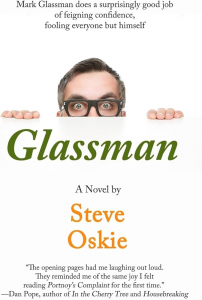
Review: Glassman by Steve Oskie

Review By: Margaret R. Sáraco

In this semi-autobiographical novel that takes place in Philadelphia and on the Jersey Shore, author Steve Oskie and his main character, Mark Glassman, have much in common: both dropped out of college, have the same taste in music, grew up in Philadelphia, and worked many jobs.

Mark’s journey to adulthood will keep a reader engaged while scratching their heads about his aimlessness. He works a series of odd jobs he is unqualified for, though sometimes he has a talent for something that surprises Mark and the reader. One of his prospective employers remarks in the novel saying, “Is it kosher for me to fire you before you start the job?”Clearly his resume turns into a document of failures.

During off hours, Mark imbibes enough recreational drugs and alcohol to keep himself numb. He fancies himself as a writer, something that simmers throughout the novel but comes across as a real chore to get him motivated. Mark seems to be a smart man with a lot of dumb ideas. Mark educates himself by reading and analyzing Philip Roth Portnoy’s Complaint, The Universal Baseball Association (a novel by Robert Coover), and The Sorrows of Young Werther by Johann Wolfgang von Goethe. During an amusing exchange, he gets caught by his foreman on a construction site reading Goethe’s novel during his lunch break.

Oskie lets the reader see the inner workings of his main character, who can shatter like glass. Mark pursues two women at the same time, although when dealing with women, words like terror and horror come to his mind. At first, his eye set upon Sarah Sloane. He then falls in love with Teresa Devlin, then ping-pongs his affections back to Sarah while more women enter and depart. At one point, Mark reflects: “I was still under the impression that I would never get anywhere with women simply by being myself, taking a genuine interest in them, and becoming a good person.” His fear of relationships harkens back to his parent’s divorce years before and the resulting trauma. He makes it his mission to disassociate himself from his parents and their expectations.

Mark can’t and won’t grow up, however, readers can’t help rooting for him. Because everyone in some aspects of life refuses to grow up too, readers patiently wait to see if Mark will figure out his life. While this coming-of-age story takes the character longer than most to mature (Mark’s mother would agree), Glassman is worth the wait.


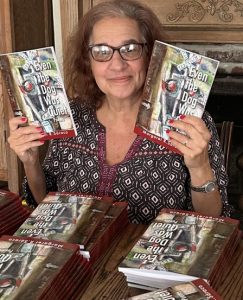
A writer, spoken word artist, and activist, Margaret R. Sáraco taught middle school math for 27 years before publishing her poetry books, If There Is No Wind and Even the Dog Was Quiet with Human Error Publishing. She is a poetry editor for the Platform Review, an online literary journal.


Insomnia, Part XXII

Within the salon’s dark cough, beauticians

glue fingernails to their anchorage.

Enslavement to labor is nothing like sleep.

Awake they wait for papers whose likelihood

is quantum mechanical. They consume, pay

taxes on tobacco and tea, and move through

a city as though stickless in a kennel

of unfamiliar dogs. Where they were born

they welcomed eggs without salmonella.

Extractive industry propelled a century

of blackened air. At night they could feel

atmospheric mud and the breath of siblings.

And into the night they would evacuate

to flee the earth’s hand-wringing. Here, they

subsist on a translated diet. They must train

the tongue backward and learn to swim

through natives’ suspicion. Headlong, they plunge

into the mainstream with so much fervor, so little rest.


Alan Elyshevitz retired as an assistant professor of English from the Community College of Philadelphia. He is the author of a collection of stories, The Widows and Orphans Fund (SFA Press), a poetry collection, Generous Peril (Cyberwit), and five poetry chapbooks. Winner of the James Hearst Poetry Prize from North American Review, he is a two-time recipient of a fellowship in fiction writing from the Pennsylvania Council on the Arts.


A Photo of my Grandfather (Sumter, SC circa 1928)

To read “A Photo of my Grandfather (Sumter, SC circa 1928),” click HERE.


Darryl Holmes received his MFA from Fairleigh Dickinson University where he also served as an editorial reader for “The Literary Review,” the university’s international journal of contemporary writing.  In the past few years his poems have appeared in Water-Stone Review, New York Quarterly, African American Review, Obsidian, River Heron Review, Kind Writers Magazine, Jelly Bucket, and Toho Journal. His first book “Wings Will Not Be Broken,” was published by Third World Press in Chicago.  He lives in NJ with his wife and youngest son who attends college in PA.  


Infinity curve, with cheesesteak

My brother looks me in the eye when we

talk – always. Even driving through Philly

at rush hour after the airport. He drives

with his left knee, both hands going up

with questions, out for emphasis, pointing

at landmarks – like the cheesesteak

place we passed at 70 miles an hour,

the c and the e in the neon sign dark

because, bullets. He plays drums at Temple

and works with street kids and stuffs himself

with all the life he can find. The sketchier,

the better, he says. He’s still going on about

cheesesteaks, wants me to know how good

food works. If you’re not running scared

to the counter and back to your car, you’re

eating average at best. I’ll take my chances.

I’m not here forever. Have you called mom?

He means he won’t live in Philly for long

but suddenly my stomach feels him gone,

sees my own hands white knuckling

the wheel, turning down the safest streets

with a broken heart and a hungry mouth

that wants another hundred miles of American

cheese and sautéed onions, driving so fast

you’d think God was tapping his foot, talking

about everything out loud as if our lives

depended on it, because they did.


Stacey Forbes is the author of Little Thistles, a poetry chapbook published by Finishing Line Press as the winner of their 2023 New Women’s Voices competition. Stacey’s work appears in some of the publications she loves, including Beloit Poetry Journal, New Ohio Review, Terrain.org, and Split Rock Review. Born in Pennsylvania, Stacey now lives and writes in Tucson, Arizona.


Divine Property: Tin Cup

I watched the blind beggar drag his body

into the shadow of Broad and Samson,
his hands like ash, his face half-covered

by an old hat he treats like an heirloom.

His cup was there, waiting like an open mouth,

the faint sound of coins bouncing against

its tin skin, each ping like a cracked bell

calling for something bigger.

He could tell a nickel from a dime by the way it settled,
its spinning stopped cold, and he must have felt
the difference between mercy and mockery—
the penny tossed by a man with rings on all his fingers,
the same man who spat once and crossed the street.
And the sign beside him, “Love Your Neighbor,”
written in some shaking hand, curling at the edges,
greasy with fingerprints by a friend in exile
bent away and ashamed of this kingdom.

I think about the weight of his bag, the bottle tucked
under his coat, warm against his ribs—his only comfort—
and I wonder about the composer of that sign, if he believed it,
if he too sat here once, holding out his hands.
He knows the sound of justice, the ache of an empty cup,
the slow, careful way hope folds itself into a corner
and waits for someone who knows its name.

And I want to ask him if he remembers
a song or a prayer, or if he only listens now
to the shuffle of shoes, the endless clicking
of heels on pavement, the city moving past him,
never stopping. Would he recognize my breath
if I knelt and dropped a quarter wrapped in a twenty
or would I become just another sound,
another dull thud in the cup’s wide-open mouth?


Tim Gavin is an Episcopal priest. In addition to his most recent publication, A Radical Beginning (Olympia Publishers, 2023), he is the author of Lyrics from the Central Plateau, a chapbook of poems released by Prolific Press in November 2018. His articles, essays, and poems have appeared in The Anglican Theological Review, Barrow Street Review, Blue Heron Review, Blue Mountain Review, Cape Rock, Chiron Review, The Cresset, Grow Christians, Digital Papercut, Evening Street Review, Library Journal, Magma, Poetry Quarterly, Poetry South, Poetry Super Highway, and Spectrum. He lives with his wife, Joyce, in Newtown Square.


For the Bride in my DNA

Village shuttered against night, clay stove fired up, the kettle steaming

in the damp. Her position set, the old Dutch-German requires it, a cook

to bank the fires to prepare the meals. His bed? She has her own, a right

to refuse the man; she made him sign his mark upon the deed she’s folded up,

squared in her belongings, a quilt she patched with her mother, a bronze knife,

a single coin to pay her funeral. The bride could be called young in polite nations,

here she is the cook, a lover if she permits it. There is no church, no dowry,

not even a dress beyond what she made on her last name day, stitched like her

comfort depended on it, the dress, a sturdy enough coat against cold, rain,

the haymaking weather she will cook in, every day, for the rest of her days,

with a man who agreed to pay her, shelter her, and fuck her with child, in her

own time, or his own time, should he drink or take to anger, as men do.

She is given flowers to cover her from evil, a bit of dirt from her father’s house,

a bit of ash from her mother’s hearth. She doesn’t believe evil is darkness,

she understands darkness divides evil into shadow, nothing can be trusted

with the eye. When the old man picks her up he whispers, I’ll keep demon’s fingers

from your ankles, and carries her into the house, and puts her down

like a basket of beets. He salts the stoop, strikes candles against the known.

They eat a stew with bread. He drinks to shatter her place. She hears the crack

of the whisky cask and tumbles into a well of worry. He visits her in those first hours

of darkness, the journey hardly off her, to keep you safe from it, from the evil 

that would take you right outside the door. She knows she has no choice

in the matter, she’s  heard her mother’s bed clatter;  the demon is in the gaps

between spirit and man, how often he lifts it to his lip, how often he puts it away.


Cassandra Whitaker (she/they) is trans writer living in rural Virginia. Whit’s work has been published in Michigan Quarterly Review, Conjunctions, The Mississippi Review, Lamba Literary Review and other places. They are a member of the National Book Critics Circle and an educator. Wolf Devouring A Wolf Devouring A Wolf is forthcoming from Jackleg Press in 2025. wolfs-den.page


Ruby: A Meditation on Friendship in the City of Brotherly Love

I disliked Ruby from the moment I met her.  It was my first day as the administrative assistant at a brand-new company, and she could not be bothered with the new girl.  To be fair, in the accounting department it was the busiest time of the month, and she was clearly frazzled with all of the billing that needed to go out the door.  I told myself to give her a chance, but as the weeks went by it became clear that she was brusque and abrasive, and she had this way of talking to me that made me feel like she was ordering me around.  And so, our feud began.

For the first few months, we largely ignored each other when we passed in the hallway or the lunchroom, but then the day came when my company promoted me to an accounting clerk position.  I was elated until I discovered that my trainer would be none other than Ruby, and my figurative balloon of excitement popped and fell in sad little pieces to the floor of my cubicle.  The friends I had made around the office told me to simply ignore her attitude, but that’s easier said than done when you are spending hours on end together.

“Accounting always has to work on weekends during month-end.  That’s just the way it is,” she told me one Friday afternoon as I prepared to leave.  “I’ll see you tomorrow at 9:00 a.m. and we’ll get all of the billing done.”

“How long will that take?  I have plans tomorrow night.”  I didn’t tell her that I had a date with a cute guy from the office, and that there was exactly 0% chance that I was staying past 4:00 p.m.

“I don’t know, Ashleigh.  We work until it’s done,” she huffed before shutting her office door in my face.

So, I showed up bright and early on Saturday morning, and worked… and worked… and worked.  The billing was definitely not finished when I knocked on Ruby’s door at 4:00 p.m. sharp to tell her I was leaving, but I didn’t care.  I was 23 years old and not ready to work my entire Saturday away, especially not to help someone who had sprung it on me the very afternoon before.  Of course, this didn’t sit well with Ruby and she told me as much.

“That’s really disappointing, Ashleigh.” (That condescending tone, ugh.)  “I thought I could count on you to get the work done.  I guess I’ll just stay all night finishing it, so show me where you left off.”

“Everything is on my desk, you’ll figure it out,” I said flippantly and walked out the front door.  Later that evening, though, I started to worry.  What if she told our boss that I had shirked my duties?  What if she claimed that I’m a liability to the accounting department, and that I should be fired?  My first real job, and this woman would ruin it all, or so I was convinced by the time I walked into the office on Monday morning.

Turns out that she did figure it out and got all of the billing done.  It also turns out that she did not, in fact, tattle on me to our boss.  I was shocked, and I felt this little piece of melted ice fall from the iceberg that was my dislike for Ruby.  Sure, around the office, we still called her “Rude-y” or “Moody Ruby” among ourselves when she was on a rampage about something, but I also begrudgingly began to respect her.  She had a strong work ethic that I could only hope to emulate.  She was very intelligent, and a great problem solver.  Most of all, on the few occasions that her stony façade cracked, she had an infectious laugh.  Maybe I didn’t dislike her quite as much as I had originally thought.

My work situation soon changed, however, because I was promoted again to a financial analyst position with the opportunity to work from our Center City office.  I couldn’t believe my luck!  It seemed like a dream to take the train into the big city every day and have my very own cubicle on the 22nd floor of 1650 Arch with expansive windows that looked out toward One and Two Liberty Place.  I began to take walks every day at lunch, exploring the neighborhoods around my office.  I wandered east on JFK Boulevard to City Hall, then back west to 30th Street Station.  Some days I walked northwest toward the Franklin Institute and the Benjamin Franklin Parkway, but other days I chose a southerly direction toward the leafy haven of Rittenhouse Square.  The city was mine to discover, and I soaked in my lunchtime explorations like sunshine.

As my love for Philadelphia bloomed, so did my obsession with photography.  I adored the city’s architecture and started taking pictures here and there of interesting buildings, trees, and streets I saw on my daily walks, posting my favorite shots to my Instagram.  Roaming one day around Fitler Square, I found myself face-to-face with a lime-green house and its cherry-red door.  It was so visually pleasing that I immediately raised my phone camera and snapped a picture.  The next street over revealed a lemon-yellow door within a pale gray brick façade, and the following street showcased the most cheerful and ornate Kelly-green door adorned with a shamrock wreath.  My mission on my afternoon walks became finding new and interesting doors.  They were the hidden treasures to be found past the hustle and bustle of Center City with its towering skyscrapers and streets teeming with people dodging steam rising from sewer grates.  My solitary photography walks were the best part of my work days.

The old saying goes that absence makes the heart grow fonder.  True to that phrase, the less I saw Ruby, the more we talked.  We remotely collaborated on work tasks more often, and we did so in an increasingly friendly manner.  My respect for Ruby continued to grow, and I could sense that her respect for me was also blooming as I matured in both my personal outlook and my accounting role.  Then, a year after my move to Philadelphia, our company announced that our offices were merging, and that we would all be working from the Center City office.  On the day of the move, I helped Ruby settle into her cubicle right down the hall from my own.  Ruby had been staunchly against working in the city, turning her nose up at the idea and voicing her displeasure at every opportunity, but as she marveled at our shared view, I had a hard-to-explain feeling.  I sensed that she was masking her fear of the city with haughtiness so as not to show her vulnerability. It was that realization that gave me an idea.

“Hey Ruby, why don’t we take a walk and go grab some lunch?” I asked her.  After a moment of hesitation, she agreed.  We set off into the bright sunshine and strolled over to the food court at One Liberty Place.  Sneaking a peek at Ruby through my sunglasses, I could tell by the way she tilted her head back to look at the skyscrapers that she was impressed by the architecture.  By the time we had eaten and worked our way back to the office, Ruby seemed happier about being out and about in Philly.  The next day, when I asked if she’d like to go for a walk at lunch, she almost jumped out of her chair and excitedly exclaimed, “Yes, count me in!”

This lunch walk, I decided, would be different – I wanted to show Ruby more of the city that I had fallen in love with over the past year and a half.  On this day, I guided her to Rittenhouse Square.  There was a bustling outdoor art market being held in the park, and we wandered from stall to stall, stopping here and there to admire the miniature watercolors depicting Boathouse Row and the canvas photography prints of the skyline looking across the Delaware River from the Camden Waterfront.  I bought an etching of a bluebird; Ruby bought some greeting cards to send to her family.  They lived in New England, and Ruby confessed that she missed them dearly and sometimes considered moving home to be near them.  Another crack in her tough façade had appeared, and I felt awful that she must be lonely without her family nearby.  My family had always been close – what would it be like to be far from them?  What kind of person might I be without the steadying presence of my loved ones?  Hearing Ruby’s situation gave me a deepened understanding of her outward behavior.

As the months went on, our lunchtime walks became daily happenings.  I still loved finding beautiful new doors and revisiting my favorite ones.  As the city prepared for Halloween and then Christmas, festive seasonal decor began to appear on many doors, much to my joy.  Ruby, on the other hand, favored windows.  She saw these as eyes to the people living in the houses behind them, and she especially delighted in seeing house cats perched on inner windowsills, basking in a sunbeam or playing with a curtain.  I showed Ruby my Instagram profile full of my door pictures; she promptly set up her own Instagram and began posting her lovely window shots.  Our walks were the highlight of my day, as it was so nice to share my thoughts, ideas, memories, and hopes with Ruby, and to hear hers.  Some days, we just wandered in silence.  The only sounds were the occasional “Oh look over there” or “Let’s walk down this little street,” the birds chirping in the trees, the far-off honk of car horns, and the crunch of our footsteps on concrete, leaves, or snow.

Ruby and I began to meet up in Philadelphia on weekends.  We took the ancient elevator up to the observation deck under William Penn’s statue at City Hall and reveled in the view.  We sneaked up to the conference area on the 33rd floor of the Loews Hotel and were equally entranced by that vantage point.  I watched Ruby fall in love with the city much as I had the year before, and by spending this time together I discovered that she wasn’t the brash, mean person I thought she was when I first met her.  She was a kind, thoughtful, smart, funny, wonderful human.  I just had to gain her trust to see the soul inside.

A few years after Ruby’s move to the city office, our company announced they were moving all accounting operations to Houston and offered to pay for each employee’s relocation.  Ruby took the offer; I found a new job in the area.  I couldn’t leave my family or the city I loved so much, but Ruby was ready for a new adventure.  On our last day in the office together, Ruby helped me pack up my things and then we embarked on one last walk.  We found ourselves in the sanctuary of the Cathedral Basilica of Saints Peter and Paul.  Neither Ruby nor I are particularly religious people, but we sat quietly together in a pew admiring the grandeur.  Ruby, of course, found the stained-glass windows fascinating, while I was in awe of the ornate front doors.  In that moment I realized that, despite our differences, being able to bond over the city we had both come to adore was what had created a lasting friendship.

It’s been eight years since I last saw Ruby.  She did indeed move to Texas and remains there to this day.  I, meanwhile, met my now-husband and moved to Wilmington, Delaware.  Ruby and I mostly keep in touch over social media.  I miss her and wish we spoke more often.  I hope in the future we can reconnect in person, but whenever I post a new door picture on Instagram, I think of my special friend and those golden days we shared in the City of Brotherly Love, and without fail, I smile.


Ashleigh McAneny is an emerging writer and photography enthusiast whose works have appeared in The Philadelphia Inquirer, Stonecrop Magazine, and Reader’s Digest.  She particularly enjoys writing creative nonfiction and fiction, and photographing colorful doors.  Born in Philadelphia and raised in Montgomery County, Pennsylvania, Ashleigh earned a Bachelor of Interdisciplinary Studies from Villanova University.  She now resides in Wilmington, Delaware with her husband and their dog.  You can find her @ashleigh_erin on Instagram.